Weds 7th September 2022, 09:00-10:00 London BST
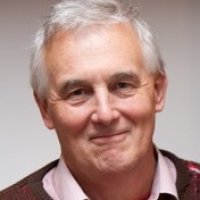
Facilitator: Chris Dowrick
- The aim of this workshop is to explore how literary reading may ameliorate our personal and vicarious experiences of suicide. It will consider how literature enables us to acknowledge the deeply inconsolable, to ‘think’ reality when ordinary human thought falls short, to allow for the possibility of imagining the ‘shabby, confused, agonised crisis which is the common reality of suicide’ and to develop empathy towards individuals who seek it.
- The intended outcome is to expand participants’ understanding of the recursive relationship between literature and mental health, and in particular to see the potential value of literary reading as a means of broadening our approach to suicide prevention.
The recording of this workshop can be found here or click on the image below
Trigger Warning: this session will talk about people who live with suicidal thoughts, have attempted suicide, and those who have sadly died by suicide. We recognise that this would naturally have an impact on people for a wide range of personal reasons, and encourage you to ask questions, seek reflection, or step back from this session if it feels too challenging.
If you are affected by suicide or self- harm, through your work, your personal life, there are some sources of support:
For anyone (clinical or not clinical):
- Suicide postvention work and resource: https://uksobs.org/for-professionals/postvention/ - Postvention information: https://www.nhsemployers.org/articles/suicide-prevention-and-postvention - Suicide Prevention Centre: https://www.sprc.org/comprehensive-approach/postvention
Samaritans: call 116 123, or visit: https://www.samaritans.org
For UK doctors:
https://www.practitionerhealth.nhs.uk – or text SHOUT to 85258
https://www.bma.org.uk/advice-and-support/your-wellbeing/wellbeing-supp…
For Australian colleagues: https://www.beyondblue.org.au
Before you watch this workshop, here are some suggestions for things you might want to look at before you join the conversations, in order of time commitment:
- None: just turn up and join in.
- Minimal: download text of Anna Karenina’s final minutes and watch this YouTube clip of Kiera Knightley: https://www.youtube.com/watch?v=gClqXAnP_7k
- A bit more: read the detailed account of Anna’s last day in Book 7, chapters 27-31.
- If you don’t have a copy of Anna Karenina on your bookshelf, you can access a freely available e-version of the Garnett translation here: https://www.gutenberg.org/files/1399/1399-h/1399-h.htm
- Even more: compare and contrast Anna’s life and death with Levin’s existential struggles, by reading the final chapters of Book 8, starting at chapter 8.
- A lot: of course, you can (re-)read Tolstoy’s epic novel in its entirety…..
Speaking on Wednesday 6th July 17.30 - 18.15
The 3rd Helen Lester Memorial Lecture - Suffering and Hope
Christopher Dowrick is Professor of Primary Medical Care in the University of Liverpool and a general practitioner in Aintree Park Group Practice. He is Board Advisor for Mersey Care NHS Trust, Senior Investigator Emeritus for the National Institute for Health Research in England, and Professorial Research Fellow in the University of Melbourne in Australia. He is a member of the World Organisation of Family Doctors’ working party on mental health, and a technical expert for the World Health Organisation’s mhGAP programme.
His research portfolio covers common mental health problems in primary care, with a focus on depression and medically unexplained symptoms. He critiques contemporary emphases on unitary diagnostic categories and medically-oriented interventions, and highlights the need for socially-oriented perspectives. He is currently investigating equity of access for people from marginalised communities, and exploring the concept of self in primary care encounters.
The second edition of his book Beyond Depression was published by Oxford University Press in 2009. He contributed to the BMJ ‘Too Much Medicine’ series on the over-medicalisation of depression.